FEANTSA, together with its members at the CAW Groep in Belgium, Focus Ireland and their partners at the Irish Refugee Council welcome the European Court of Justice’s ruling from the 1st of August 2025 according to which EU Member States remain fully obligated, even in the face of sudden or unforeseeable migration pressures, to ensure asylum seekers’ fundamental needs are met.
In its decision in case C97/24 (S.A. & R.J. v Ireland),[1] the Court has ruled categorically that an EU Member State may not invoke an unforeseeable or mass influx of asylum seekers as justification for failing to provide basic reception conditions, such as accommodation, food, and water, to people seeking international protection. The ruling further holds States accountable for systemic failures, confirming that exigent circumstances do not negate the duty to uphold minimum reception standards, as derived from the Reception Conditions Directive.[2]
This decision reinforces the fact that human dignity, as set out in Article 1 of the EU Charter of Fundamental Rights, cannot be suspended during times of crisis. The Court also highlights that failing to provide an applicant without sufficient means with the necessary conditions, even temporarily, constitutes a manifest and grave exceeding of its discretion with regard to the application of the directive, and reminds that such a failure is therefore capable of constituting a sufficiently serious infringement of EU law, triggering the liability of the Member State concerned.
The signatories of this statement welcome the ECJ ruling in the context where the failure to provide adequate reception conditions has been repeatedly reported across Europe. A prominent example is the one of Belgium which has left more than 10 000 asylum seekers homeless over the past four years, despite numerous judgements from national and European courts.[3] In 2025, Belgium adopted its strictest migration and asylum policy ever.[4] The changes, which the Belgian Minister of Asylum, Migration and Integration has described as “crisis measures”[5] aim to limit access to the reception network and have been rolled out already. In less than a week after the implementation of the first measure (refusing reception for individuals granted protection in another Member State), new cases of homelessness among families with children were reported in Brussels.[6] Further reductions in the budget for the homelessness sector[7] and cuts in available reception places in Brussels[8] paint a very grim picture for the fast-approaching winter season.
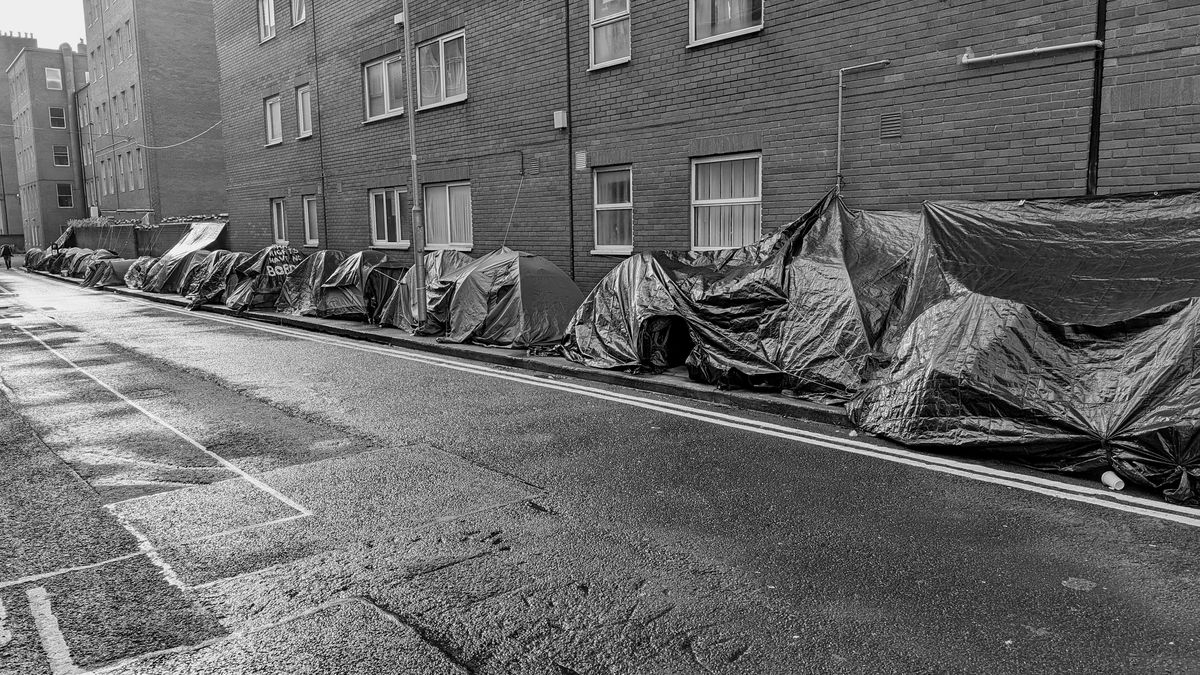
Ireland has yet to address the situation following the ECJ ruling - from October to December, the practice of leaving asylum seekers to sleep rough until accommodation became available was still in place, despite civil society in Ireland highlighting that additional accommodation had been made available.[9]
Regrettably, the reaction from the Irish Minister of Justice prior to the ECJ ruling has not only neglected to consider possible remedies for the situation, but it has wrongfully implied that supporting one group (the asylum seekers) would be in the detriment of the other (nationals experiencing homelessness).[10] Such narratives risk creating further tensions and fuelling racism in our societies, which puts in danger the lives of those in search of international protection, as was the case with the deliberate attack in early November at the Drogheda accommodation centre in Ireland.[11]
In view of these events, the signatories reiterate our call for restrictive migration policies not to generate homelessness and that the right to housing - including access to shelter - to be fully recognised as fundamental human right, not a privilege tied to residence status. This right should be accessible to everyone, ensuring that they can live in dignity and safety.[12]
Furthermore, we call for an end in narratives that portray migration as dangerous, people seeking protection as “shopping for asylum”[13] as well as dangerous comparisons between different groups living in vulnerable conditions. Asylum seekers, and migrants in general, should not be compared to citizens experiencing homelessness when discussing entitlements. Everyone has a basic right to shelter and essential support regardless of their background without discrimination and our leaders and societies should strive to uphold high social justice standards for all.
We urge the EU and its Member States to ensure that all those in need of basic support can access it in a dignified manner and therefore we call on policy makers to take action to:
- Fully implement and monitor EU standards under the Reception Conditions Directive, ensuring they apply universally and without exception.
- Strengthen housing and homelessness strategies at both national and EU levels, ensuring adequate investment in prevention, support, and affordable housing supply.
- Reject narratives of competition between groups in vulnerable situations and instead promote integrated policies that protect human dignity universally.
- Member States such as Ireland and Belgium must comply with and implement ECJ decisions by taking urgent action to ensure all asylum seekers can access dignified reception conditions; the EC should initiate infringement procedures where MS fail to apply EU law.
- Ensure sufficient capacity in the reception systems, including contingency planning for situations where large numbers of applications are received, as part of the ongoing preparatory works for the implementation of the Migration and Asylum Pact.
The ECJ’s ruling in C97/24 reaffirms that legal obligations to protect vulnerable persons transcend political or logistical pressures. Recognising the right to dignified reception for asylum seekers is not a concession, but an affirmation of Europe’s commitment to universal human dignity. No one in Europe should lack shelter or basic support simply because Member States were not expecting their arrival.
Human dignity is not a limited resource. Protecting the rights of asylum seekers does not come at the expense of citizens experiencing homelessness; rather, it affirms the principle that no one should be abandoned to live on the streets in Europe. Ending homelessness in Europe is not possible without also ending homelessness among migrants, irrespective of their residence status.
NOTES TO EDITOR
Signatories:
- FEANTSA (The European Federation of National Organisations working with Homeless People)
- CAWs Group Belgium: CAW Antwerpen, CAW Rivierenland, CAW De Kempen, CAW Brussel, CAW Limburg, CAW Halle Vilvoorde, CAW Oost-Brabant, CAW Oost-Vlaanderen, CAW Centraal-West-Vlaanderen, CAW Zuid-West-Vlaanderen, CAW Noord-West-Vlaanderen
- Focus Ireland
- The Irish Refugee Council
[1] https://curia.europa.eu/jcms/upload/docs/application/pdf/2025-08/cp250102en.pdf
[2] Directive 2013/33/EU of the European Parliament and of the Council of 26 June 2013 laying down standards for the reception of applicants for international protection.
[3] https://www.amnesty.org/en/latest/news/2025/04/belgium-persistent-failure-to-provide-reception-violates-rights-and-dignity-of-people-seeking-asylum/
[4] New asylum measure is an 'ill-considered policy', says Flemish refugee group
[5] No more Belgian shelters for asylum seekers protected elsewhere
[6] Nouvelles règles d'asile: des familles avec enfants à la rue à Bruxelles - BX1
[7] Homelessness sector furious with Arizona budget cuts
[8] BelRefugees reception centre closes with loss of 320 places | The Bulletin
[9] Practice of leaving asylum seekers to sleep rough must end, groups demand – The Irish Times
[10] Court ruling would give newly arrived asylum seekers more rights than homeless people, Minister claims – The Irish Times
[11] Gardaí investigating alleged arson believe fire at Drogheda Ipas centre was ‘started deliberately’
[12] https://www.feantsa.org/public/user/Resources/Position_papers/2025/migration/FEANTSA_position_on_migration.pdfFEANTSA Position on Migration | FEANTSA